Kenya boasts a rich history dating back millions of years, evident in its diverse historical sites scattered across the country. Here’s a glimpse into some of the must-visit historical gems, their locations, and what awaits you at each:
Lake Turkana National Parks
Located in Kenya’s remote northern region, Lake Turkana National Parks comprise Sibiloi National Park, Central Island National Park and South Island National Park.
Lake Turkana is the world’s largest desert lake and is often called the Jade Sea because of its striking blue-green colour. Its dramatic volcanic landscape creates one of the most unusual and beautiful environments in Kenya.
One of the area’s greatest attractions is Koobi Fora, an internationally important archaeological and palaeontological site. Fossil discoveries made here have contributed significantly to the understanding of human ancestry and the ancient environments in which early humans lived.
The islands and surrounding landscapes also support Nile crocodiles, hippopotamuses, migratory birds and other wildlife adapted to the region’s harsh conditions.
What to experience
- Visit the fossil sites and museum at Koobi Fora
- Explore Sibiloi National Park
- See Central Island’s volcanic craters
- Photograph the dramatic desert scenery
- Learn about the cultures of northern Kenya
A journey to Lake Turkana is ideal for adventurous travellers interested in archaeology, anthropology, photography and remote wilderness experiences.
Fort Jesus, Mombasa.
Fort Jesus is one of Kenya’s most recognisable historical landmarks.
The Portuguese constructed the fort between 1593 and 1596 to protect the port of Mombasa and strengthen their control over Indian Ocean trade routes. Its imposing walls, bastions and geometric design reflect Renaissance military architecture.
Over the centuries, the fort changed hands several times as Portuguese, Arab, Swahili and British powers competed for control of Mombasa. These different occupations left behind architectural and cultural influences that visitors can still observe today.
What to experience
- Walk along the fort’s ramparts
- Explore its chambers, courtyards and passages
- View historical artefacts in the museum
- Learn about Indian Ocean trade
- Continue into the neighboring Mombasa Old Town
Fort Jesus can easily be included in a Mombasa city tour or combined with a beach holiday along the Kenyan coast..
Lamu Old Town.
Lamu Old Town is the oldest and best-preserved continuously inhabited Swahili settlement in East Africa.
The town has retained its traditional character for centuries. Its architecture combines Swahili building techniques with Arab, Persian, Indian and European influences.
Visitors can wander through narrow streets lined with coral-stone houses, shaded courtyards, verandas and elaborately carved wooden doors. Because motor vehicles are largely absent from the old town, people commonly travel on foot or by donkey, giving Lamu a relaxed atmosphere that feels far removed from modern city life.
Lamu has also remained an important centre for Swahili and Islamic culture, learning and religious celebrations.
What to experience
- Walk through the narrow streets of the old town
- Visit Lamu Museum and Lamu Fort
- Admire traditional Swahili architecture
- Take a sunset dhow cruise
- Explore nearby Shela Village
- Sample traditional Swahili cuisine
Lamu is an excellent destination for travellers interested in culture, architecture, history and slow coastal travel..

Kenya Lake System in the Great Rift Valley.
The Kenya Lake System in the Great Rift Valley consists of three alkaline lakes: Lake Bogoria, Lake Nakuru and Lake Elementaita.
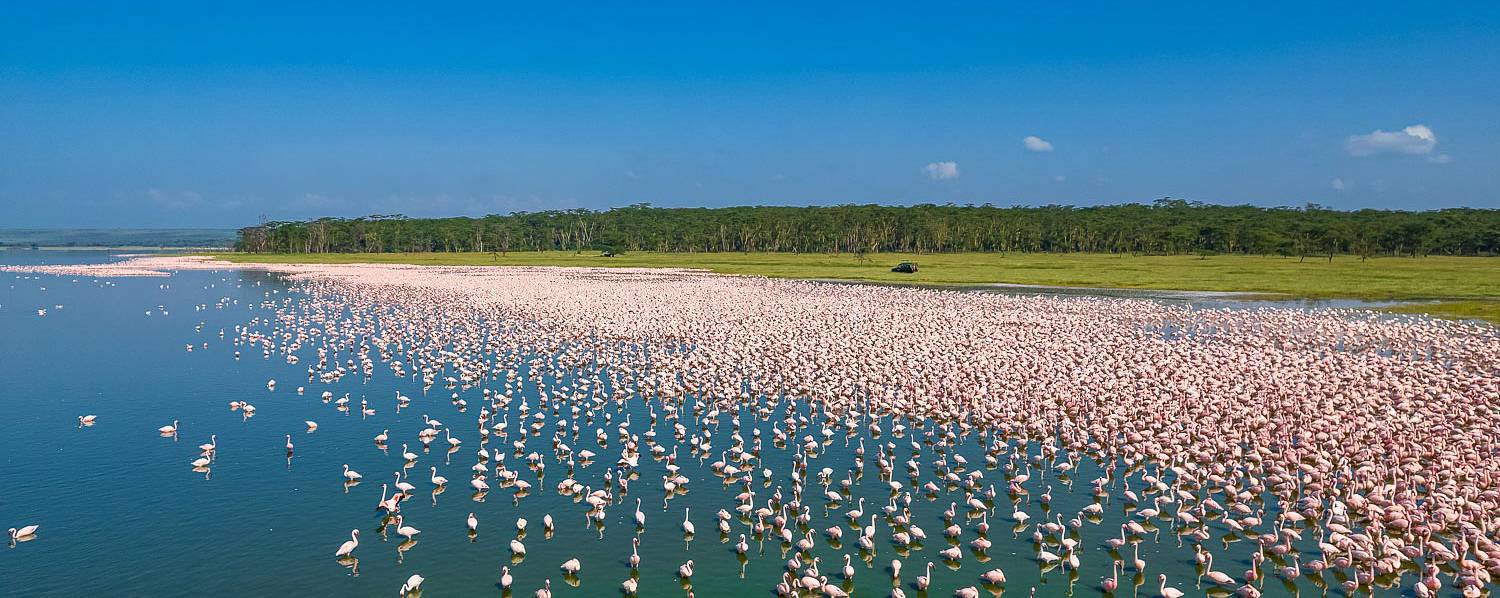
Together, the lakes create an extraordinary natural habitat for birds and wildlife. Large numbers of lesser flamingos move between the lakes depending on water and feeding conditions, creating one of Kenya’s most memorable natural spectacles.
The surrounding landscapes include hot springs, geysers, volcanic formations, forests, open grasslands and steep Rift Valley escarpments. The protected areas also support black rhinos, Rothschild’s giraffes, lions, cheetahs, greater kudus and numerous bird species.
What to experience
- Watch flamingos and other waterbirds
- Visit the hot springs and geysers at Lake Bogoria
- Enjoy wildlife drives in Lake Nakuru National Park
- Photograph the Rift Valley landscapes
- Visit viewpoints overlooking the lakes
- Combine the lakes with a wider Rift Valley safari
This destination is especially attractive to birdwatchers, wildlife photographers and travellers looking for a safari experience within easy reach of Nairobi.
Mount Kenya National Park and Forest
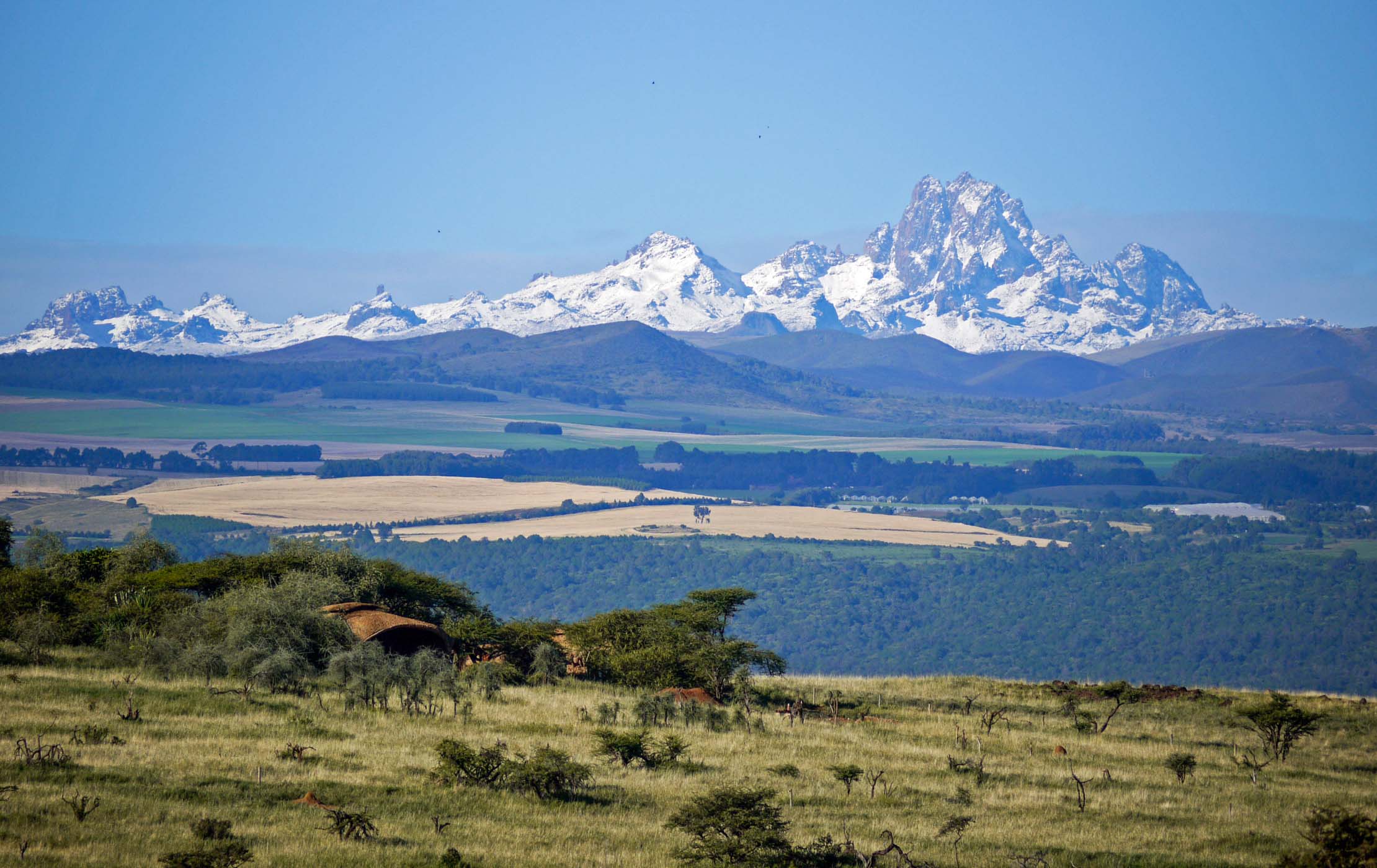
Rising to 5,199 metres, Mount Kenya is Africa’s second-highest mountain and one of the continent’s most impressive landscapes.
The mountain is an ancient extinct volcano characterized by rugged peaks, glacial valleys, mountain lakes, forests and unique Afro-alpine vegetation. The scenery changes dramatically as visitors move from the forested lower slopes towards the rocky high-altitude environment.
The wider World Heritage property includes the Lewa Wildlife Conservancy and Ngare Ndare Forest Reserve. These landscapes provide important habitats and migration routes for wildlife, including elephants.
Mount Kenya is also culturally important to communities living around it and is regarded as a sacred mountain in local traditions.
What to experience
- Trek towards Point Lenana
- Enjoy guided forest walks
- Observe unique mountain vegetation
- Visit mountain lakes and valleys
- Spot elephants and other wildlife on the lower slopes
- Combine mountain trekking with a Laikipia safari
Climbing Mount Kenya requires preparation, suitable equipment and experienced guides. Travellers who do not wish to reach the higher elevations can still enjoy scenic walks and wildlife experiences around the mountain’s lower slopes.
Sacred Mijikenda Kaya Forests.
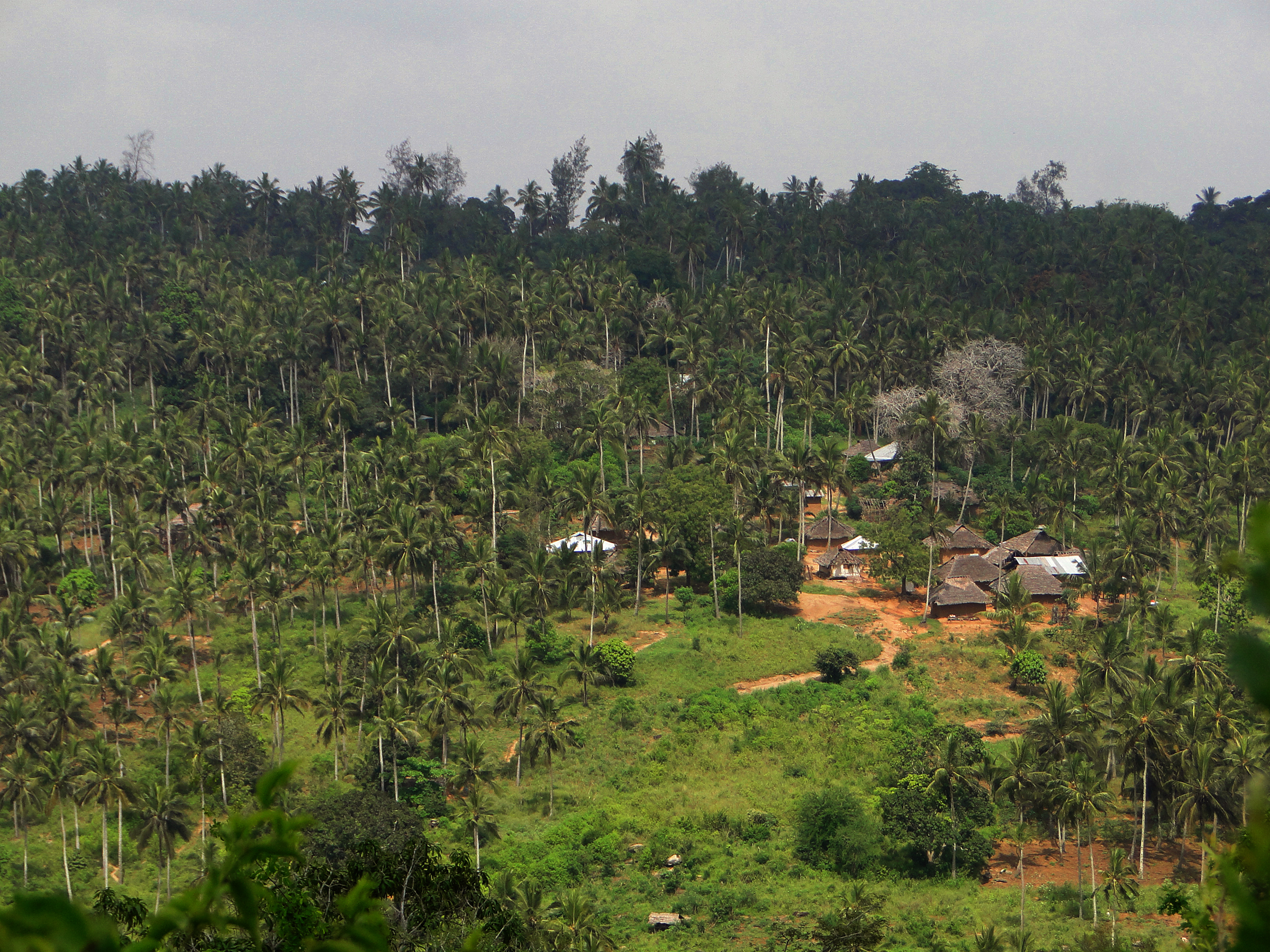
The Sacred Mijikenda Kaya Forests are a collection of 10 protected forest sites spread along approximately 200 kilometres of Kenya’s coastline.
Within these forests are the remains of fortified settlements known as kayas. They were established by the Mijikenda communities beginning around the 16th century and were gradually abandoned as permanent settlements during the early 20th century.
The forests remain spiritually important because they are regarded as ancestral homes and sacred places. Traditional councils of elders continue to play an important role in protecting the sites and preserving their cultural practices.
The spiritual protection given to the kayas has also helped conserve some of the remaining coastal forest habitats.
What to experience
- Learn about Mijikenda history and traditions
- Visit accessible kaya forests with an authorized local guide
- Discover the connection between culture and conservation
- Support community-led heritage tourism
- Observe indigenous coastal forest vegetation
Visitors must respect local customs and follow instructions from elders and guides. Some parts of the forests may have restricted access because of their spiritual importance.
Thimlich Ohinga Archaeological Site.
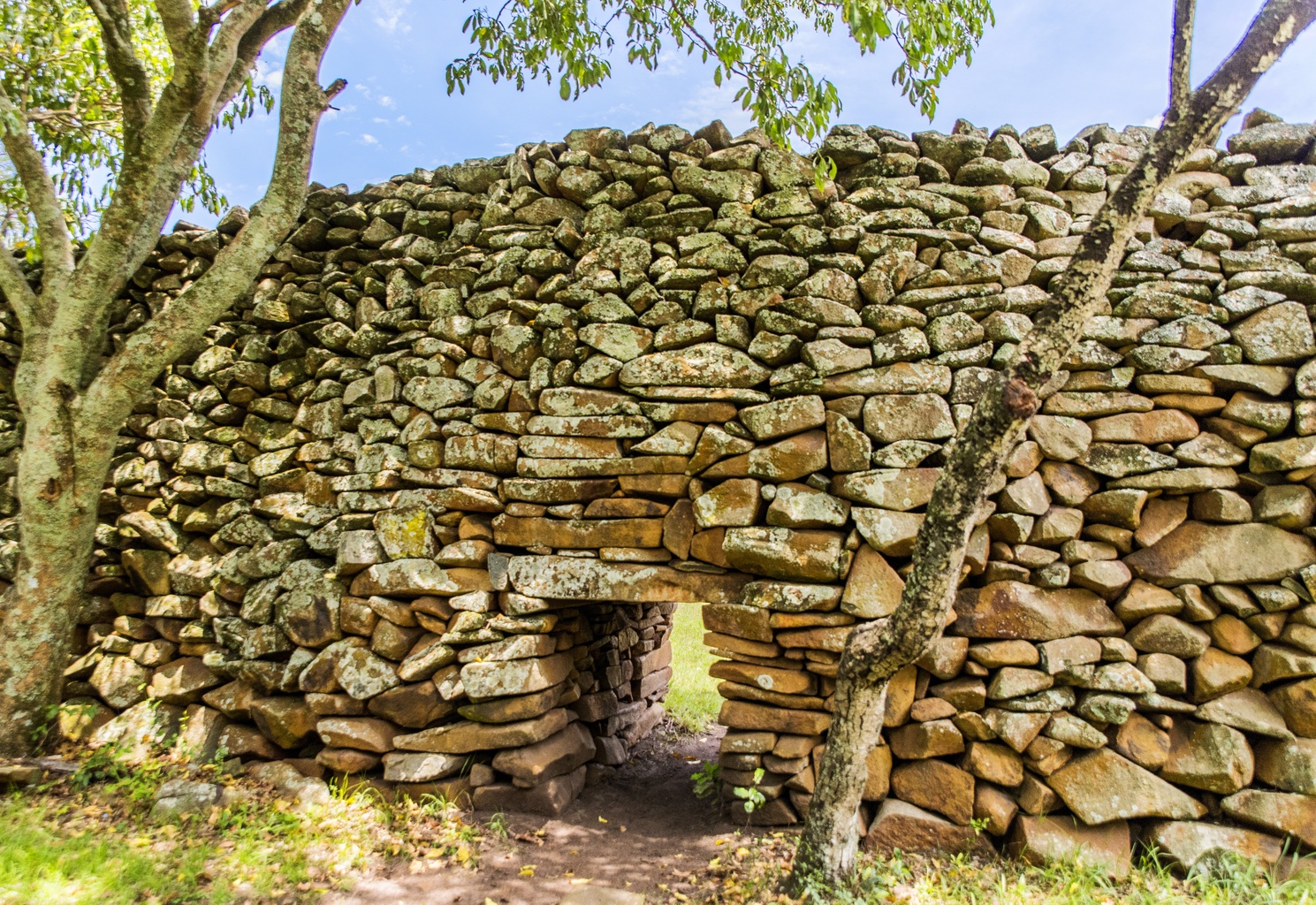
Thimlich Ohinga is situated approximately 46 kilometres northwest of Migori Town in western Kenya.
The site contains massive dry-stone walls built without mortar or cement. Stones were carefully arranged and interlocked to create strong enclosures, some of which rise several metres high.
These structures protected communities and their livestock while also defining social and family units. The site reflects settlement traditions practised by pastoral communities around the Lake Victoria Basin from the 16th century to the mid-20th century.
Thimlich Ohinga is the largest and best-preserved example of this type of dry-stone settlement in the region.
What to experience
- Walk through the ancient stone enclosures
- Learn about traditional construction techniques
- Discover the settlement patterns of early communities
- Combine the visit with a western Kenya safari
- Explore nearby Lake Victoria attractions
Thimlich Ohinga is a valuable addition to itineraries covering Migori, Ruma National Park, Homa Bay, Rusinga Island and other western Kenya destinations.
The Historic Town and Archaeological Site of Gedi.
The Historic Town and Archaeological Site of Gedi became Kenya’s eighth UNESCO World Heritage Site in 2024.
Hidden within a coastal forest near Malindi and Watamu, Gedi was an important Swahili town between the 10th and 17th centuries. It participated in a major Indian Ocean trading network connecting East Africa with Arabia, Persia, India, China and other distant regions.
The ruins include mosques, tombs, houses, wells, defensive walls and an elaborate palace complex. Archaeologists have also discovered imported objects, including Chinese porcelain, showing the town’s connection to international trade.
Gedi’s sophisticated water systems, coral-stone buildings and organised streets reveal that it was once a wealthy and highly developed urban settlement.
What to experience
- Explore the palace and mosque ruins
- Walk beneath the surrounding coastal forest
- Visit the site museum
- Learn about ancient Swahili trade networks
- Combine Gedi with Malindi, Watamu or Arabuko-Sokoke Forest
Gedi is one of the easiest UNESCO sites to add to a Kenya coast holiday.
Tips for Visiting Kenya’s Heritage Sites
Choose destinations that match your interests. Lake Turkana and Mount Kenya are excellent for adventure and natural history, while Lamu, Gedi and Fort Jesus are ideal for travellers interested in Swahili culture and Indian Ocean trade.
Some heritage sites are located in remote areas and require carefully organised transport, accommodation and local guides. Always confirm opening arrangements before travelling.
Visitors should also dress respectfully, ask permission before photographing local people or sacred places and follow instructions from guides and community elders.
Supporting local guides, craftspeople, restaurants and community tourism projects helps ensure that heritage tourism benefits the people responsible for protecting these destinations.
Plan a UNESCO Heritage Safari in Kenya
Kenya’s UNESCO World Heritage Sites reveal a side of the country that many visitors never experience.
You can trace the story of early humanity at Lake Turkana, explore the remains of prosperous Swahili towns, walk through sacred coastal forests, discover ancient stone settlements and experience some of East Africa’s most spectacular natural landscapes.
A heritage safari can be organised as a complete historical journey or combined with wildlife safaris, beach holidays, mountain trekking and cultural experiences.
Let us tailor-make a Kenya safari that takes you beyond the ordinary. Contact us today and allow our travel specialists to design a personalised journey through Kenya’s remarkable UNESCO World Heritage Sites.
Frequently Asked Questions
How many UNESCO World Heritage Sites are there in Kenya?
Kenya currently has eight UNESCO World Heritage Sites. Five are classified as cultural properties and three as natural properties.
What is the newest UNESCO World Heritage Site in Kenya?
The Historic Town and Archaeological Site of Gedi is Kenya’s newest UNESCO World Heritage Site. It was inscribed in 2024.
Is Maasai Mara a UNESCO World Heritage Site?
Maasai Mara is not currently inscribed on the UNESCO World Heritage List. It appears on Kenya’s Tentative List, which contains sites that may be considered for nomination in the future.
Which UNESCO sites can be combined with a Kenya safari?
Lake Nakuru, Mount Kenya, Lake Turkana and Thimlich Ohinga can be incorporated into wildlife and cultural safari itineraries. Fort Jesus, Lamu, Gedi and the Mijikenda Kaya Forests can be combined with a Kenya coast holiday.
Can all eight sites be visited during one trip?
Yes, but the sites are spread across different regions of Kenya. A complete tour would require careful planning and sufficient travel time. Many visitors choose a regional itinerary covering the coast, Rift Valley, western Kenya or northern Kenya.